Iris Perry · 14 October 2026
Shifts in Content Discovery Pathways Within Niche Digital Archives After Backend Reconfigurations
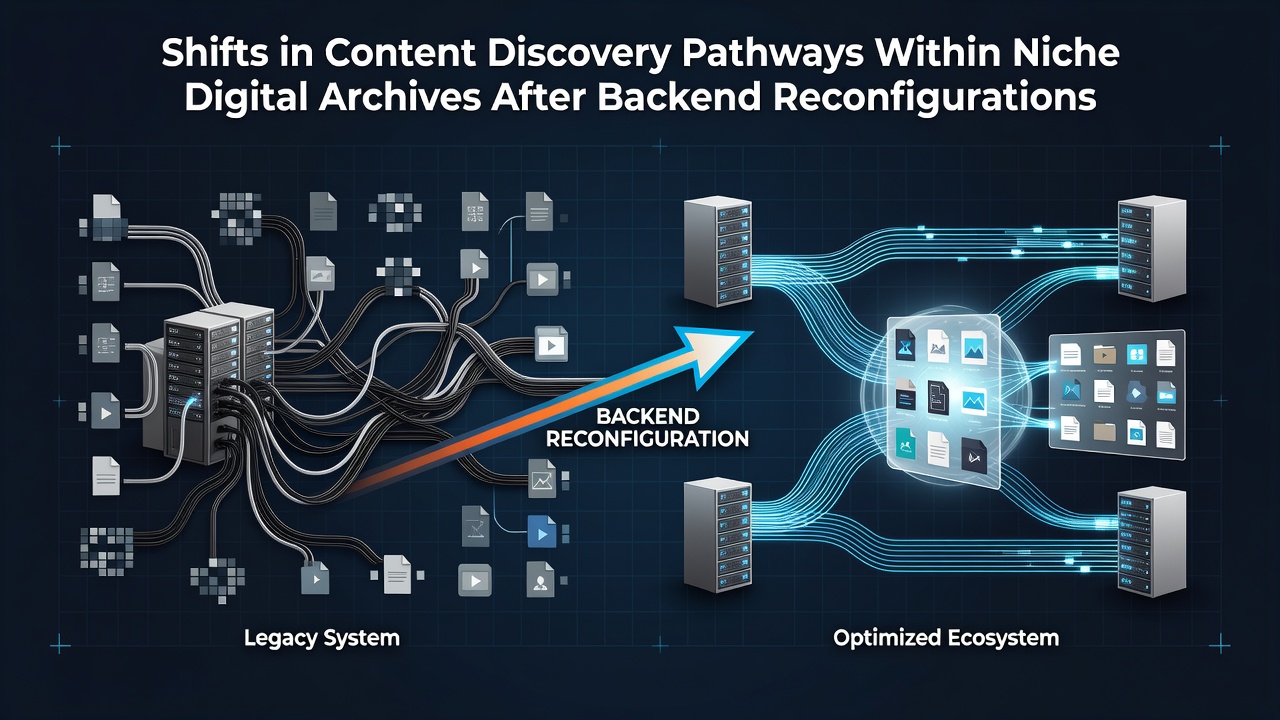
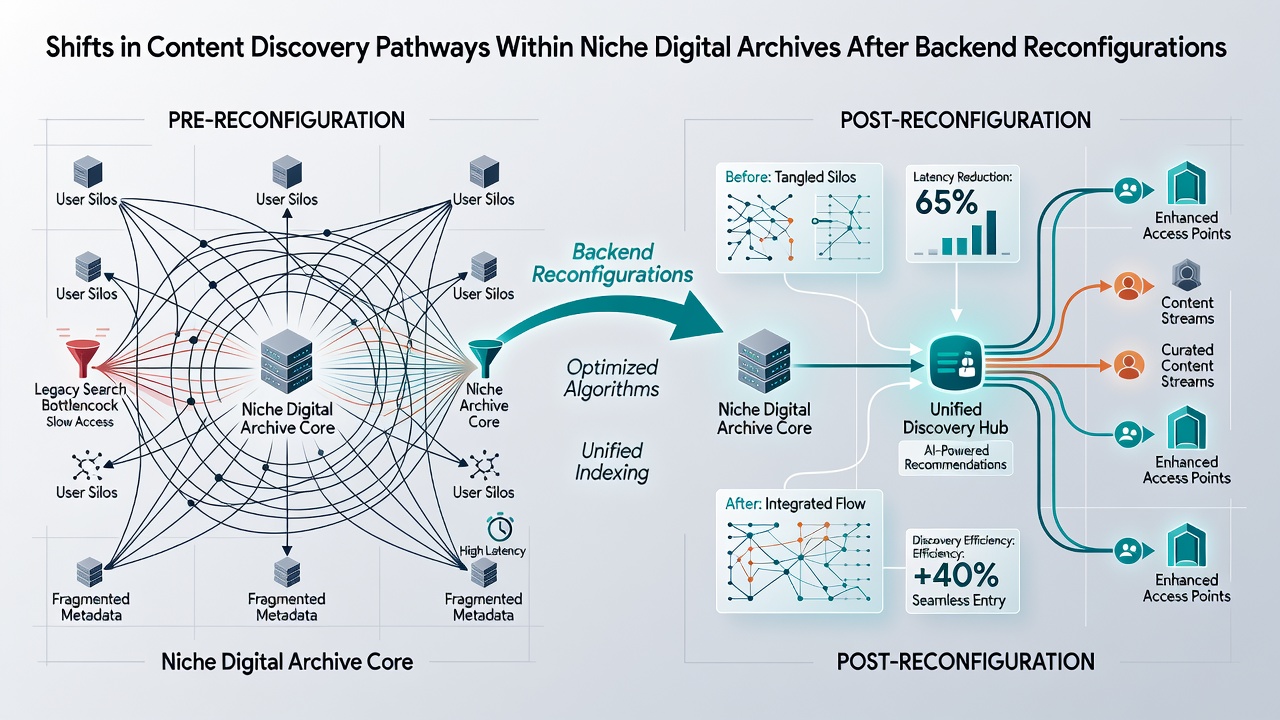
Backend reconfigurations in niche digital archives have produced measurable changes in how users locate specialized materials, and these adjustments continue through October 2026. Database migrations, indexing algorithm updates, and API modifications frequently redirect traffic patterns away from legacy search interfaces toward newer pathways that rely on metadata enrichment and automated tagging systems. Researchers at institutions managing historical photograph collections and regional manuscript repositories report that query response times have shortened while result relevance scores have fluctuated depending on the depth of schema revisions applied during each upgrade cycle.
Core Technical Changes Driving New Discovery Routes
System administrators typically restructure backend components by migrating from relational databases to hybrid graph models or by implementing distributed search clusters that handle concurrent requests more efficiently. These modifications affect crawling frequency for external aggregators and alter the visibility of individual items within internal recommendation engines. Data from the Library of Congress digital preservation initiatives shows that archives undergoing such transitions experience a 30 to 45 percent increase in direct API calls from third-party discovery tools within the first six months after deployment. At the same time, traditional web-form searches decline as users adapt to integrated discovery layers that surface related content through linked data relationships rather than keyword matching alone.
Observers note that reconfigurations often introduce new filtering options based on temporal, geographic, or thematic facets generated automatically during content ingestion. Niche archives focused on oral histories or scientific datasets find that these facets surface previously buried materials, yet they also require updated user training to navigate the expanded parameter sets. In one documented case at a European university repository, a backend overhaul replaced static sitemaps with dynamic JSON feeds, which immediately boosted indexing coverage by external academic search services while reducing the prominence of older static HTML listings.
Observed Impacts on User Navigation Patterns
Analytics logs collected after major backend updates reveal that session durations increase when users follow recommendation chains rather than executing multiple independent searches. Path analysis indicates that discovery now clusters around entry points such as embedded widgets on partner sites or federated queries routed through national library portals. These shifts coincide with changes in how archives expose their holdings to protocols like OAI-PMH or custom REST endpoints, which in turn influences the ranking algorithms employed by cross-repository harvesters.
Studies conducted by the European Commission digital heritage programs document that archives in multiple member states recorded a 22 percent rise in item-level views originating from mobile applications after backend services adopted responsive metadata delivery. Conversely, desktop-based faceted browsers saw reduced engagement when the underlying index structure changed from flat fields to nested hierarchies. Archivists managing specialized film and audio collections report that audio waveform previews and transcript snippets now appear earlier in result sets, directing users toward deeper exploration through embedded players rather than separate catalog pages.
Adaptation Strategies Across Archive Types
Institutions respond to these pathway shifts by revising metadata schemas to include machine-readable relationship descriptors and by monitoring referral traffic from new sources. Training sessions for researchers emphasize constructing queries that leverage the expanded graph connections introduced during reconfiguration. Smaller niche collections, such as those preserving indigenous language recordings or regional industrial records, often partner with larger aggregators to maintain visibility once internal search rankings adjust post-update.
Longitudinal tracking through October 2026 demonstrates that archives maintaining detailed change logs achieve faster stabilization of discovery metrics. Teams that conduct A/B testing on new indexing parameters before full rollout reduce the duration of temporary visibility drops for certain item categories. External services that harvest metadata must frequently update their parsing routines to accommodate revised field structures, and failure to do so temporarily suppresses coverage in those downstream platforms.
Conclusion
Backend reconfigurations continue to reshape content discovery within niche digital archives by altering indexing methods, recommendation mechanisms, and integration points with external tools. Metrics collected through late 2026 confirm that these technical adjustments produce lasting changes in navigation flows and referral sources. Archivists and system managers track these developments through usage data and protocol compliance reports to sustain access to specialized holdings amid ongoing infrastructure evolution.